Category


High-Strength Carbon Fiber Prepreg Fabric for Aerospace & Automotive Applications
Carbon Fiber Prepreg Product Overview: High-Performance Composite Solutions
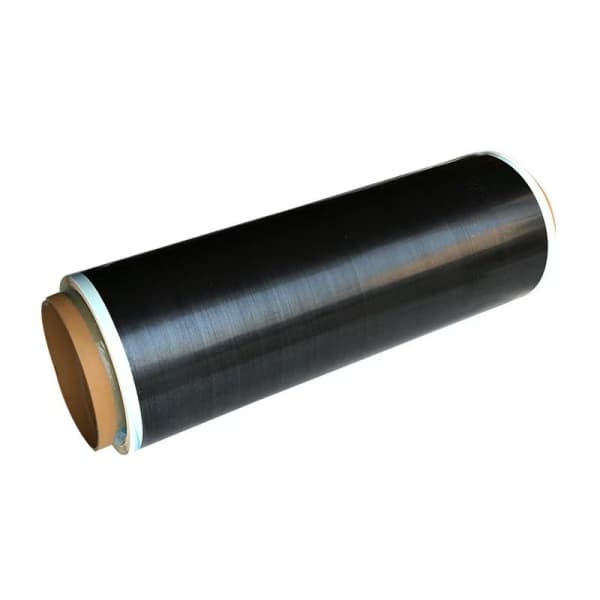
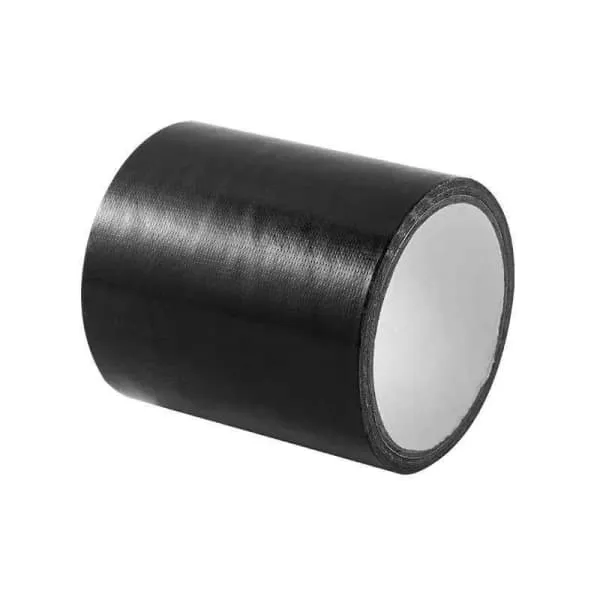
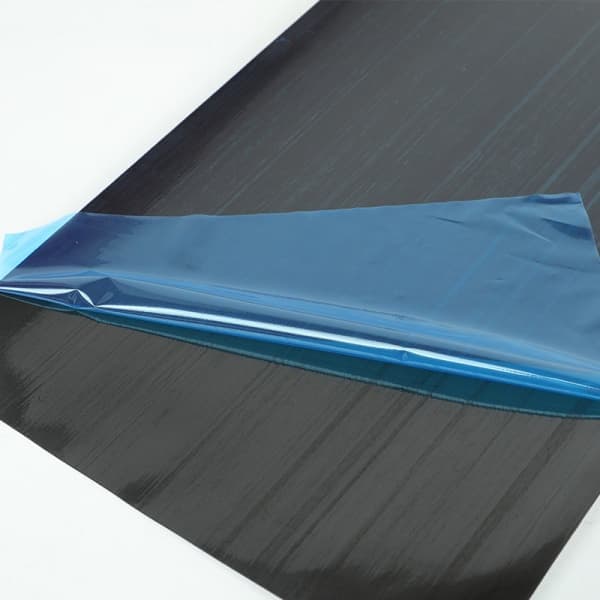
What is Carbon Fiber Prepreg?
Carbon fiber prepreg (pre-impregnated composite) is an advanced material where carbon fibers are pre-coated with a resin system (epoxy, phenolic, or thermoplastic) under controlled conditions. This ensures optimal fiber-to-resin ratio, delivering superior strength, stiffness, and durability compared to traditional wet layup methods.
Key Features:
1.Lightweight yet ultra-strong (higher strength-to-weight ratio than steel).
2.Consistent resin distribution for uniform performance.
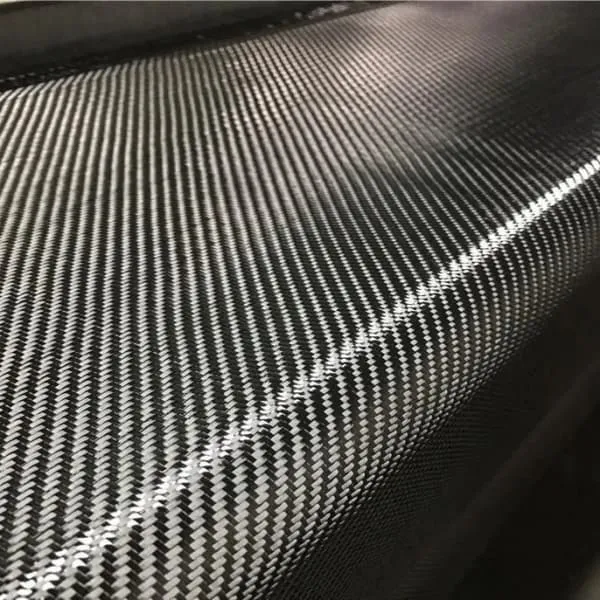
3.Available in unidirectional (UD), woven, and multiaxial forms,Twill weave prepreg rolls.
4. Compatible with autoclave, vacuum bagging, and press curing,which can be applied to aircraft carbon fiber prepreg.
Why Choose Our Carbon Fiber Prepreg?
1.Customizable resin systems (epoxy, BMI, phenolic) for different thermal & mechanical needs.
2.Multiple fiber orientations (UD, woven, biaxial) for tailored performance.
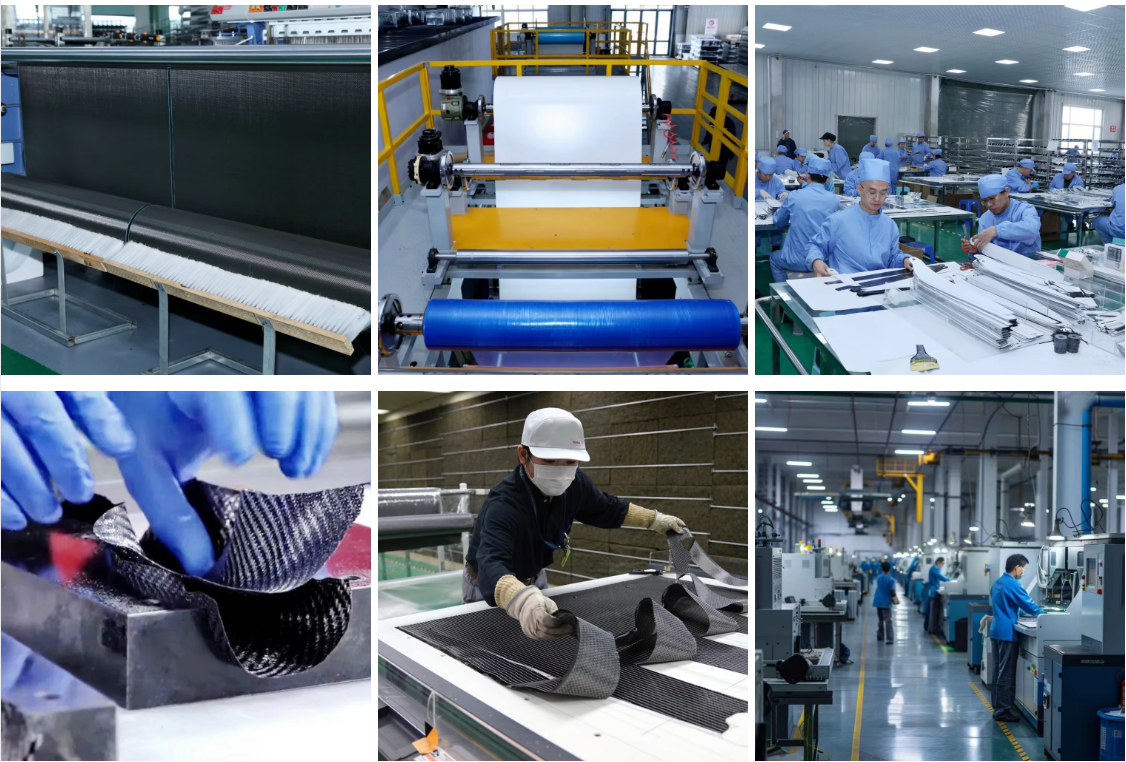
3.Strict quality control for low void content & high interlaminar shear strength.
4.Available in rolls or custom-cut kits for easy fabrication.
Model | Fiber Type | Tow Size | Grammage(g/m²) |
T300 | Standard PAN-based | 1K, 3K, 6K | 100–200 |
T700 | High-strength PAN | 12K | 200–400 |
T800 | PAN-based high strength | 6K, 12K, 24K | 145-300 |
IM7 | Intermediate modulus | 6K, 12K | 170–350 |
AS4 | Standard modulus | 3K, 12K | 300–600 |
Pattern type | Structural characteristics | Application scenarios |
|---|---|---|
Plain | 1:1 interweaving of warp and weft yarns, with a smooth surface and high stability | Appearance components, high-precision structural components |
Twill | 2 × 2 or 4 × 4 interwoven, with good flexibility and strong shear resistance | Curved surface forming, automotive components |
Satin | The warp and weft yarn has a long floating length, a smooth surface, and good coverage | Aerospace composite materials, complex mold parts |
UD | Unidirectional arrangement of fibers, extremely high unidirectional strength | Load bearing structures such as beams and poles |
Multi axial fabric | Multi layer fiber stitching at different angles (such as 0 °/90 °/± 45 °) | Wind turbine blades, boat shells |

Carbon Fiber Prepreg in Aerospace Industries:
Carbon fiber prepreg (pre-impregnated) is a critical material in aerospace and automotive engineering, where lightweight strength, fatigue resistance, and thermal stability are essential. In aircraft manufacturing, carbon fiber prepreg is used for primary and secondary structures, including wing skins, fuselage panels, tail sections, and rotor blades. The material’s high stiffness-to-weight ratio allows for significant fuel savings while maintaining structural integrity under extreme stress.
For high-temperature applications, high-temp epoxy prepreg is the preferred choice, especially in engine components, nacelles, and exhaust systems, where temperatures can exceed 300°F (150°C). In the automotive sector, carbon fiber prepreg is used in supercars, motorsports, and electric vehicles (EVs) for chassis reinforcement, monocoques, and body panels. The use of autoclave-cured prepregs ensures superior fiber alignment and resin distribution, resulting in high-performance, defect-free parts that meet stringent industry standards.
Carbon Fiber Prepreg in Sports & Industrial Applications: Precision Engineering for Demanding Environments:
Beyond aerospace and automotive, carbon fiber prepreg is widely adopted in sports equipment and industrial applications due to its exceptional strength, vibration damping, and corrosion resistance. In high-end sports gear, such as tennis rackets, golf clubs, bicycles, and racing helmets, prepreg allows for ultra-lightweight yet rigid designs, enhancing athletic performance and durability.
For industrial applications, high-temp epoxy prepreg is used in robotic arms, drone frames, medical imaging devices, and wind turbine blades, where thermal stability and dimensional precision are crucial. The material’s moldability enables complex, custom geometries, making it ideal for prototyping and mass production. Additionally, prepreg’s consistent resin content eliminates voids and delamination risks, ensuring long-term reliability even in harsh operating conditions.




 Unidirectional Carbon Fiber Prepreg Roll for Structural ReinforcementPre-impregnated carbon fiber prepreg ensures consistent resin distribution for high-performance composites. Used in aerospace, motorsports, and marine industries, it delivers exceptional strength-to-weight ratio and easy molding. Cured under heat for maximum rigidity and impact resistance.ACC-08US $1.00 - US $10.00Send Inquiry
 Ultra-Thin Carbon Fiber Prepreg Sheet with High Thermal ResistancePre-impregnated carbon fiber prepreg ensures consistent resin distribution for high-performance composites. Used in aerospace, motorsports, and marine industries, it delivers exceptional strength-to-weight ratio and easy molding. Cured under heat for maximum rigidity and impact resistance.ACC-07US $1.00 - US $10.00Send Inquiry
 Lightweight Carbon Fiber Prepreg Cloth - Ideal for Marine & Sports EquipmentPre-impregnated carbon fiber prepreg ensures consistent resin distribution for high-performance composites. Used in aerospace, motorsports, and marine industries, it delivers exceptional strength-to-weight ratio and easy molding. Cured under heat for maximum rigidity and impact resistance.ACC-06US $1.00 - US $10.00Send Inquiry
Send Message