
CFRP (Carbon Fiber Reinforced Plastic) - The Current Situation and Latest Recycling Technologies of CFRP
author: Lily
2025-12-14
What is CFRP?
CFRP (Carbon Fiber Reinforced Plastic) is a composite material made of thin and sturdy carbon fiber strands coated with plastic resin. Its key features are light weight - less than a quarter of that of steel - but high strength - several times that of steel. It is resistant to rust and has strong tolerance to temperature and humidity changes, making it suitable for long-term use even in harsh environments. Currently, CFRP is widely used in aircraft, automobiles, wind turbine blades, as well as sports equipment such as golf clubs and bicycles.
Structure and Characteristics
CFRP is a composite material composed of extremely fine high-strength carbon fibers and the plastic resin that wraps them. There are various types of carbon fibers, including PAN-based fibers with excellent strength and asphalt-based fibers with excellent rigidity, among others, and they have wide applications. Resins come in two types: thermosetting resins and thermoplastic resins. The type of resin used will affect the ease of molding and recycling.
The key feature of CFRP is its light weight (less than a quarter of that of steel), while its tensile strength is several times higher than that of steel. Moreover, by adjusting the direction of the fibers, the strength can be locally increased to adapt to the structure. Additionally, due to its corrosion resistance and deformation resistance, it can be used stably even under harsh conditions.
The application of CFRP in multiple industries
Due to its lightweight and high-strength characteristics, CFRP is receiving increasing attention as a material that contributes to achieving a decarbonized society and energy conservation. Especially in the aviation sector, it has been widely used as the main structural material for the Boeing 787 aircraft launched around 2011, thereby helping to reduce the aircraft's weight and improve fuel efficiency. In recent years, the application scope of CFRP has expanded to wind power generation, automobiles, hydrogen energy, civil engineering and construction, and other fields.
For instance, CFRP is used in the large blades of wind turbines to prevent deformation caused by wind force; in the automotive field, weight reduction is employed to enhance fuel efficiency. High-pressure hydrogen tanks for hydrogen fuel cell vehicles also incorporate CFRP. In the civil and construction sectors, the properties of corrosion resistance and light weight have been recognized and are gradually being applied to outdoor inspection channels and other locations.
Challenges in the Recycling of CFRP and Industry Responses
Although CFRP is an excellent material, it faces the challenge of being difficult to handle after being discarded. As it is a composite material, the carbon fibers and the resin are difficult to separate, making it a challenging material at the processing site. Currently, most CFRP is disposed of by landfill. Moreover, although carbon fibers are an expensive material, there is no yet a complete recycling and reuse system like that for PET bottles, and the quality of the recycled fibers varies, so ensuring the reliability during reuse has always been a problem.
However, in recent years, as people's awareness of environmental regulations and sustainable manufacturing has continuously increased, the recycling and reuse of CFRP has become an important issue within the industry. Especially when products such as aircraft and pressure vessels, which are expected to be largely retired, are approaching their end of life, practical recycling and reuse efforts need to be carried out.
Types of CFRP Recycling Technology
The recycling technologies for CFRP mainly include three methods: thermal decomposition, chemical decomposition, and mechanical decomposition (as shown in the table below). Each of these methods has its own advantages and disadvantages. Researchers are currently exploring the best methods and combinations for different applications and purposes.
| Method | Summary | Advantages | Disadvantages (Challenges) |
| Thermal decomposition method | A method of decomposing and vaporizing the resin at high temperatures, thereby leaving behind the carbon fibers. | Can obtain fibers with relatively higher strength (the most practical) | Degradation of fibers during heat treatment and energy costs |
| Chemical decomposition method | A method that uses solvents or catalysts to merely dissolve and remove the resin | Because the processing can be carried out at low temperatures, which causes less damage to the fibers, high-quality regenerated carbon fibers can be obtained. | Processing speed and drug management |
| Mechanical decomposition method | A method of crushing CFRP and using it as a recycled material | Low cost, high safety High | The obtained fibers are short and have low strength. They are recycled for use in high-performance structural materials. |
Methods for evaluating the quality of recycled carbon fibers
One of the technical challenges in the recycling and reuse of CFRP is the difficulty in assessing the quality of the carbon fibers. Since the carbon fibers recovered from used CFRP have changed in length and surface condition compared to when they were manufactured, it is necessary to quantitatively understand their strength and adhesion. For the performance evaluation of recycled carbon fibers, the National Institute of Advanced Industrial Science and Technology in Japan has developed a method called "improved fracture test". This test stretches a specimen embedded in resin with a carbon fiber, analyzes the fracture mode and length of the fiber, and thereby can simultaneously evaluate ① the distribution of the fiber's strength, ② the interfacial shear strength between the fiber and the resin in one test.
After being heated and chemically treated, the surface of recycled carbon fibers undergoes changes. As people increasingly attach importance to adhesiveness and ensuring the strength during repeated use, this testing method has been registered as an international standard (ISO) and has gained significant attention as a highly reliable assessment method. The measures taken by the Production and Technology Research Institute have enabled the quality of recycled carbon fibers that were previously handled based on intuition to now be "quantified", thereby significantly promoting the social implementation of recycling in the entire industry.
Latest research on expanding the possibility of CFRP recycling
As the latest research trend in CFRP recycling, the Institute of Industrial Science and Technology is advancing development focusing on "effective utilization of ultra-short fibers". Repeated recycling can cause the carbon fibers to shorten in length, making them difficult to be used as structural materials. Therefore, the Institute of Industrial Science and Technology has proposed a new method of mixing these fine fibers with resin and processing them into filaments suitable for 3D printers.
During the forming process, the fibers naturally align along the direction of the filament flow, which enables even short fibers to achieve high mechanical strength. The strength is approximately twice that of the fibers when not aligned. By constructing structures that can maximize performance, materials that were previously difficult to recycle also hold great potential for value enhancement.
What is the performance difference between Chinease domestic carbon fiber and imported carbon fiber?
What are the performance advantages of carbon fiber PMI sandwich panels?
Related Article

Carbon fiber composites, with their lightweight, high strength, and excellent electromagnetic properties, are becoming the preferred choice for drone manufacturing. From the shell to the rotor, they not only reduce weight but also improve flight efficiency and durability. Advanced processes such as compression molding and autoclave technology are further driving breakthroughs in drone performance, contributing to the future modular and intelligent development.
Why are more and more drones using carbon fiber casings?

Carbon fiber composites have wide applications in aerospace, industrial manufacturing etc. Their advantages, such as lightweight, high strength, corrosion resistance, good electrical conductivity, and excellent electromagnetic shielding, are increasingly recognized. Shenzhen Ant Carbon Fiber Co., Ltd., drawing on years of production experience, will answer some common questions today for your reference.
Basic knowledge about carbon fiber composite products
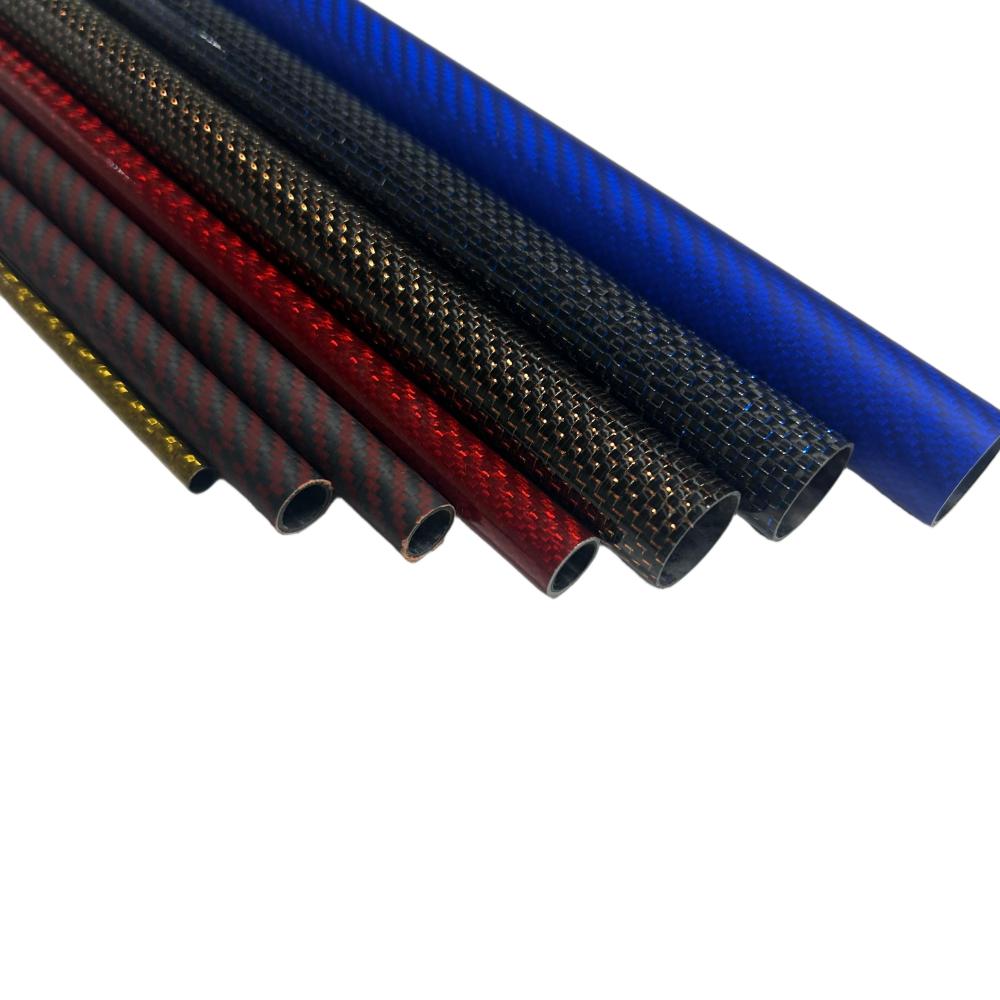
The processing of carbon fiber tubes requires different processing techniques for different applications, but the most common process is to process holes in carbon fiber tubes. In order to meet the processing requirements, we must pay more attention to the hole processing. In this process, some defects are prone to occur, with delamination being the most common. What are these details?
The formation of delamination phenomenon in carbon fiber tube hole processing
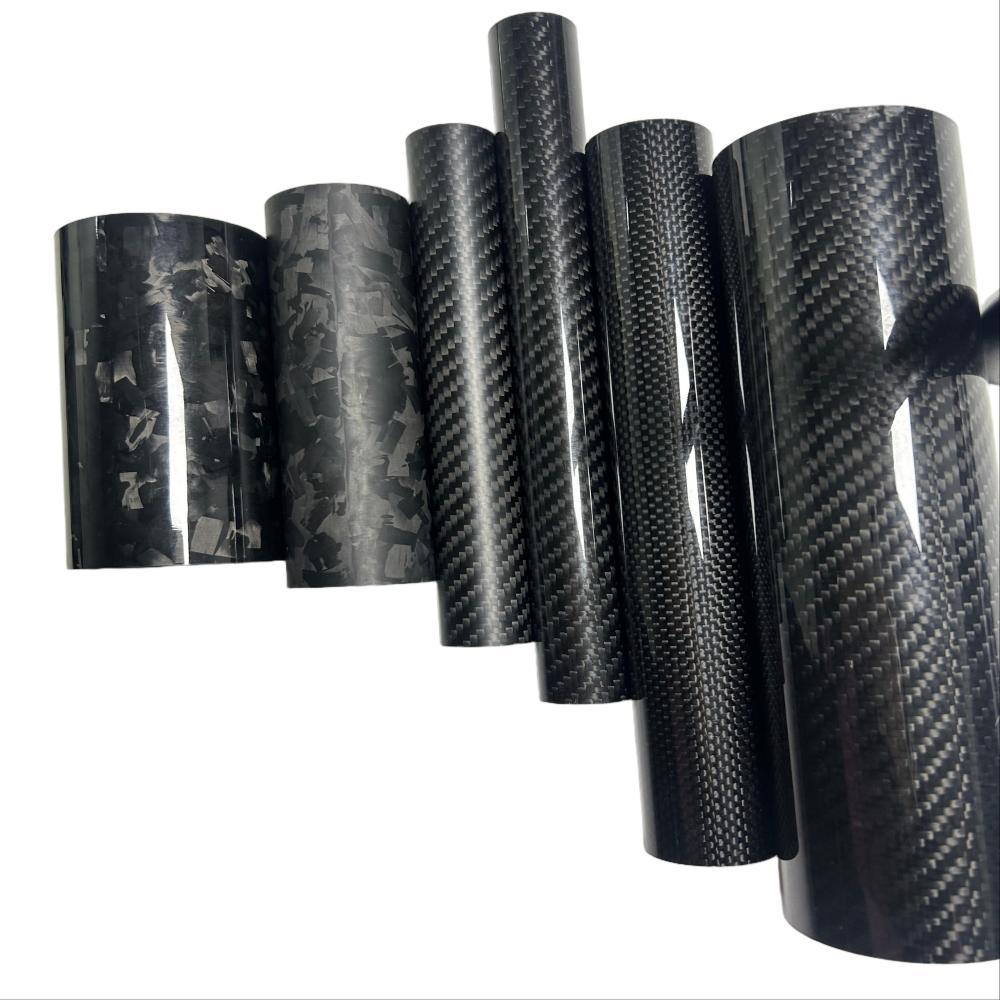
Carbon fiber tubing, also known as carbon tube or carbon fiber tube, is composed of carbon fiber material and specific resin materials. It is widely used in various supporting equipment such as drones, rotating shafts, rollers, medical devices, sports equipment, and high-end camera slide rails, and is one of the lightweight materials used in high-end industrial fields to replace metal tubing.
What are the key factors affecting the quality of carbon fiber tubing?