What are the key factors affecting the quality of carbon fiber tubing?
author: Lily
2025-12-28
Differences in Manufacturing Processes
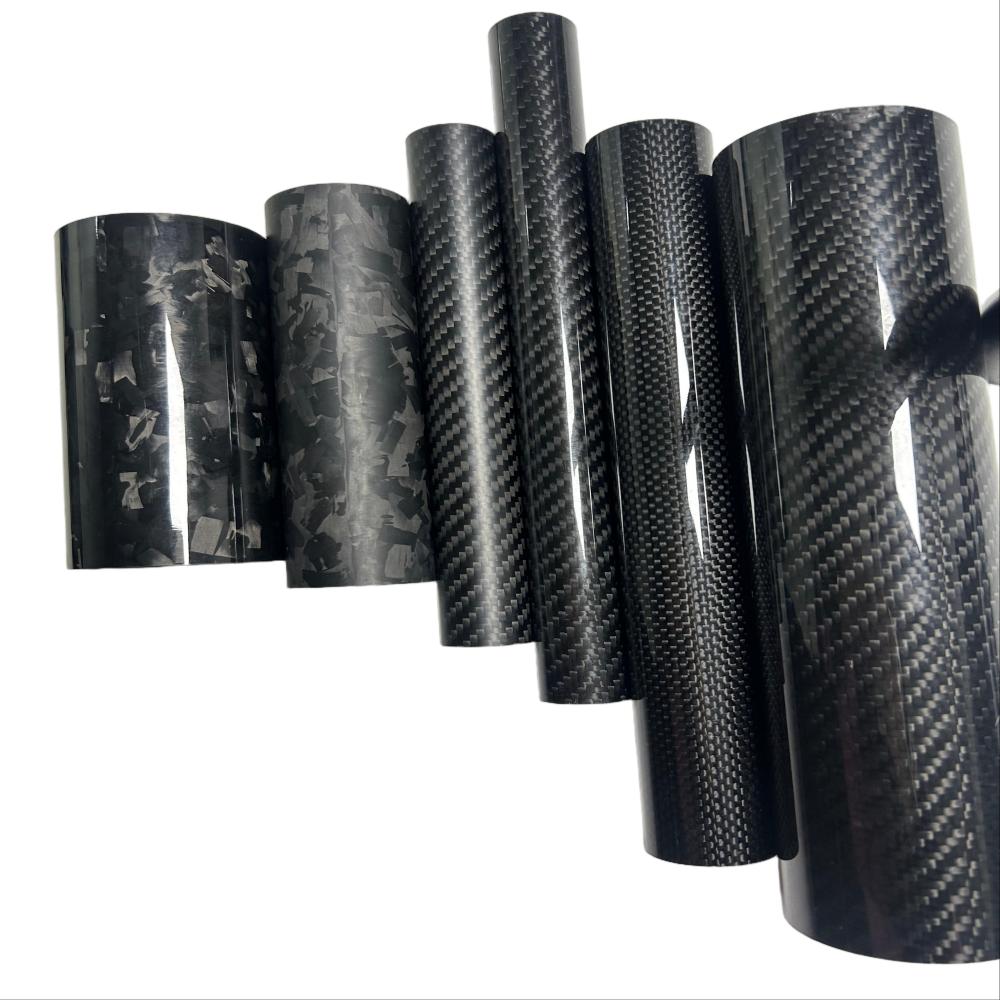
Carbon fiber tubing is generally manufactured using pultrusion, winding, and coiling methods. Each process has its advantages and disadvantages: pultrusion easily achieves fiber continuity but cannot allow for arbitrary changes in fiber angle; winding allows for designing the winding pattern according to the product's stress conditions, fully utilizing fiber strength and maximizing the required structural performance of the tubing. However, winding has limited adaptability and cannot be used for products with arbitrary structures, especially those with concave surfaces, because the fibers cannot adhere tightly to the mandrel surface during winding and remain suspended; coiling has a high degree of automation, resulting in tubing with higher strength than pultrusion and the ability to produce 3K braided textures, making it suitable for a wider range of applications, but relatively more expensive.
Material Selection
Since the strength of carbon fiber tubing is determined by the carbon fiber material itself, the quality of the carbon fiber material used in its manufacture is paramount.
Products from world-class carbon fiber manufacturers such as Toray Industries and Formosa Plastics are generally reliable. Different series of carbon fiber yarns vary significantly in mechanical properties and cost, ultimately determining the performance and price of the carbon fiber tubing. In addition, the choice of resin is also crucial. The main function of the resin is to bond carbon fibers together, distribute the load between them, and protect them from environmental influences. The selection of the resin matrix must adhere to principles such as easy curing, strong adhesion, low shrinkage, and good mechanical properties.
Mandrel Material
Mandrels made of different materials have a certain impact on the surface precision and performance of the tube. Some low-end carbon fiber tube production uses materials such as polyvinyl alcohol, sand, wood, and fiberglass to make winding mandrels. However, these materials either cannot withstand curing temperatures above 150℃ or the processing level is too rough, making it difficult to produce high-quality carbon fiber tubes. In comparison, steel and duralumin are two more commonly used mandrel materials. Steel has a higher density and hardness than duralumin, but its coefficient of thermal expansion is lower. High-performance carbon tubes require high-temperature curing; the curing temperature of epoxy resin systems can reach 170℃. Under these conditions, the curing internal pressure generated by the thermal expansion of duralumin can effectively improve the density and mechanical properties of the carbon tube.
Winding Design Parameters
During the winding process, the winding thickness, winding angle, and the sequence of winding angles all have a significant impact on the performance of the carbon fiber tube. For example, when carbon fiber tubing is used in products like drive shafts, relative motion occurs across the cross-section. A 0° layup with respect to the axial direction reduces this relative motion; ±45° layups improve the shaft's torsional resistance; and 90° layups resist shear stress in the initial torsional state, but their torsional capacity decreases with higher torque. Since 0° layups cannot be wound, increasing the proportion of layups closer to ±45° and 90° improves the torsional strength of the carbon fiber tubing. Similarly, the thickness and winding angle sequence also show predictable variations in the performance of carbon fiber tubing.
Theoretically, carbon fiber tubing offers more performance advantages than traditional metal tubing, such as high strength, corrosion resistance, low coefficient of thermal expansion, creep resistance, self-lubrication, fatigue resistance, long service life, and energy absorption and shock absorption. Most importantly, it has low density and light weight, reducing weight by more than 80% compared to equivalent steel tubing. However, in practice, whether carbon fiber tubing can truly demonstrate these performance advantages depends on numerous technical factors in actual production.
The formation of delamination phenomenon in carbon fiber tube hole processing
What are the difficulties in processing carbon fiber composite materials, specifically carbon fiber sheets and carbon fiber tubes?
Related Article

Carbon fiber composites, with their lightweight, high strength, and excellent electromagnetic properties, are becoming the preferred choice for drone manufacturing. From the shell to the rotor, they not only reduce weight but also improve flight efficiency and durability. Advanced processes such as compression molding and autoclave technology are further driving breakthroughs in drone performance, contributing to the future modular and intelligent development.
Why are more and more drones using carbon fiber casings?
Carbon fiber composites have wide applications in aerospace, industrial manufacturing etc. Their advantages, such as lightweight, high strength, corrosion resistance, good electrical conductivity, and excellent electromagnetic shielding, are increasingly recognized. Shenzhen Ant Carbon Fiber Co., Ltd., drawing on years of production experience, will answer some common questions today for your reference.
Basic knowledge about carbon fiber composite products
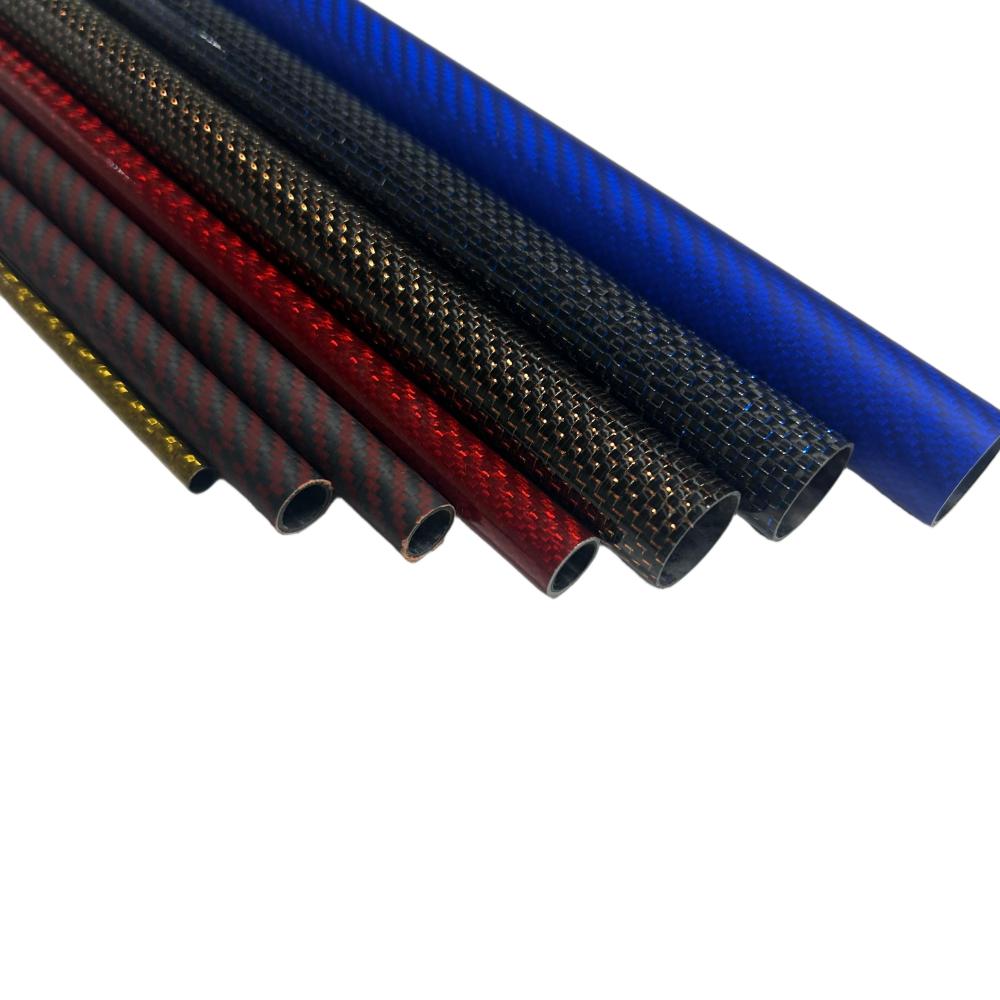
The processing of carbon fiber tubes requires different processing techniques for different applications, but the most common process is to process holes in carbon fiber tubes. In order to meet the processing requirements, we must pay more attention to the hole processing. In this process, some defects are prone to occur, with delamination being the most common. What are these details?
The formation of delamination phenomenon in carbon fiber tube hole processing
Carbon fiber composites are advanced composite materials with characteristics such as lightweight, high strength, and corrosion resistance, and are currently widely used in various fields including automotive, high-end medical, industrial, and military applications. Although carbon fiber composites have excellent properties, secondary processing is relatively difficult, especially when processing carbon fiber composite sheets and carbon fiber tubes.
What are the difficulties in processing carbon fiber composite materials, specifically carbon fiber sheets and carbon fiber tubes?