How is fiberglass made? Fiberglass production process
author: Lily
2025-12-21
How is glass fiber made?
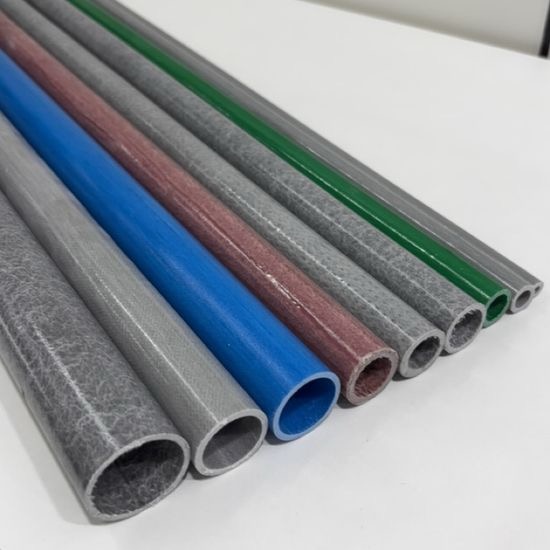
Glass fiber, short for glass fiber, is a high-performance inorganic non-metallic material. It is made from six minerals—pyrophyllite, quartz sand, limestone, dolomite, borosilicate, and boromagnesia—through high-temperature melting, drawing, winding, and weaving processes. There are two main production processes:
1. Crucible Drawing Method:
This is a two-stage forming method. First, the glass raw material is melted at high temperature to form glass spheres. Then, the glass spheres are melted a second time and drawn at high
speed to form glass fiber filaments. This process has drawbacks such as high energy consumption, unstable forming process, and low labor productivity, and has been largely phased out by
large-scale glass fiber manufacturers.
2. Tank Furnace Drawing Method:
Pyrophyllite and other raw materials are melted into a glass solution in a furnace. After removing air bubbles, the solution is transported through a channel to a porous stencil and drawn at high speed to form glass fiber filaments. The furnace can connect hundreds of stencils through multiple channels for simultaneous production. This process is simple, energy-saving, stable in forming, highly efficient, and high-yield, facilitating large-scale fully automated production, and is the main production process for glass fiber. II. Glass Fiber Production Process There are two production processes for glass fiber.
The following is an example of the crucible drawing method:
Raw material selection → Water washing → Sun drying → Placing in crucible → Burner ignition and preheating → Ignition heating to 1100-1300℃ → Glass melting and temperature adjustment → Drawing → Fiber extraction → Softening → Fiber loading → Fiber clamping and winding → Finished product unloading → Packaging → Finished product → Warehousing.
Several key steps are involved:
1. Ignition: Place the crucible on a crucible rack, ensuring it is level. Then add glass, filling it to 1/4 of its capacity, not exceeding the dimensions on either side of the crucible. It's best to have two people igniting the crucible: one with a preheated blowtorch and ignition rod, and the other controlling the temperature switch. Important notes: Before ignition, preheat the blowtorch in the crucible; don't move the ignition rod too quickly or too slowly during ignition; if bubbles or uneven temperature are observed in the molten glass, pop the bubbles with a spoon, then stir the molten glass in the crucible repeatedly until it's evenly mixed.
2. Wire Drawing and Pulling:
After ignition, wait for the temperature of the molten glass in the crucible to reach 1100-1300℃. The molten glass will automatically flow out from under the eyelets. If some eyelets don't flow out, use a wire drawer to pull the wire. Maintain a proper posture and pull from the outside in to avoid breaking the wire. Avoid touching the iron handle or the crucible holder with the clamps to prevent electric shock. After drawing all the wires, pull them a few times by hand, then begin loading the next section.
3. Threading: Before threading, spray a softener on the roller.
Wrap the pulled-down thread onto the roller, making sure to press the pressure head firmly. Push the roller by hand. After the thread is firmly pressed, turn on the motor and start running. Then, continue feeding and adjusting the temperature as needed for normal production.
Comparison: Winded carbon fiber tubes vs. pultruded carbon fiber tubes
Short-cut carbon fibers, long carbon fibers, continuous carbon fibers, carbon fiber fabrics... How exactly do we distinguish them?
Related Article

Carbon fiber composites, with their lightweight, high strength, and excellent electromagnetic properties, are becoming the preferred choice for drone manufacturing. From the shell to the rotor, they not only reduce weight but also improve flight efficiency and durability. Advanced processes such as compression molding and autoclave technology are further driving breakthroughs in drone performance, contributing to the future modular and intelligent development.
Why are more and more drones using carbon fiber casings?
Carbon fiber composites have wide applications in aerospace, industrial manufacturing etc. Their advantages, such as lightweight, high strength, corrosion resistance, good electrical conductivity, and excellent electromagnetic shielding, are increasingly recognized. Shenzhen Ant Carbon Fiber Co., Ltd., drawing on years of production experience, will answer some common questions today for your reference.
Basic knowledge about carbon fiber composite products
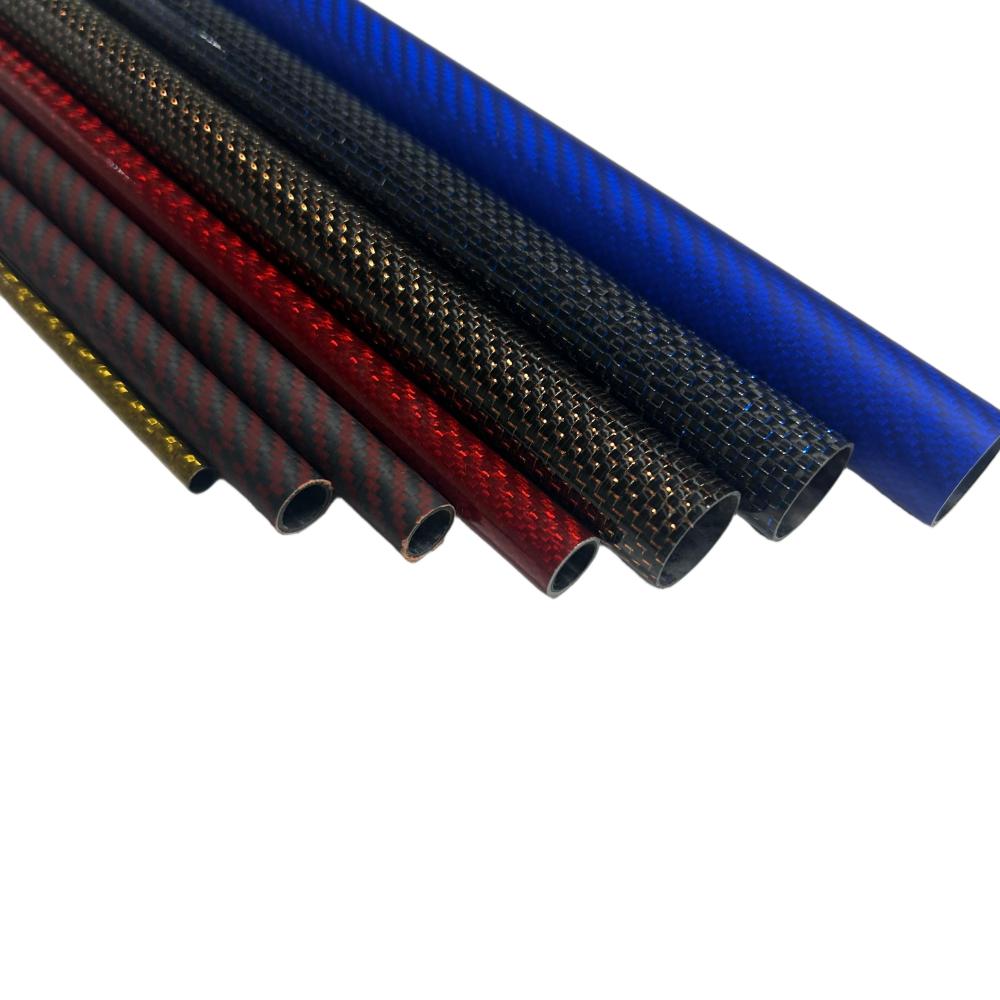
The processing of carbon fiber tubes requires different processing techniques for different applications, but the most common process is to process holes in carbon fiber tubes. In order to meet the processing requirements, we must pay more attention to the hole processing. In this process, some defects are prone to occur, with delamination being the most common. What are these details?
The formation of delamination phenomenon in carbon fiber tube hole processing
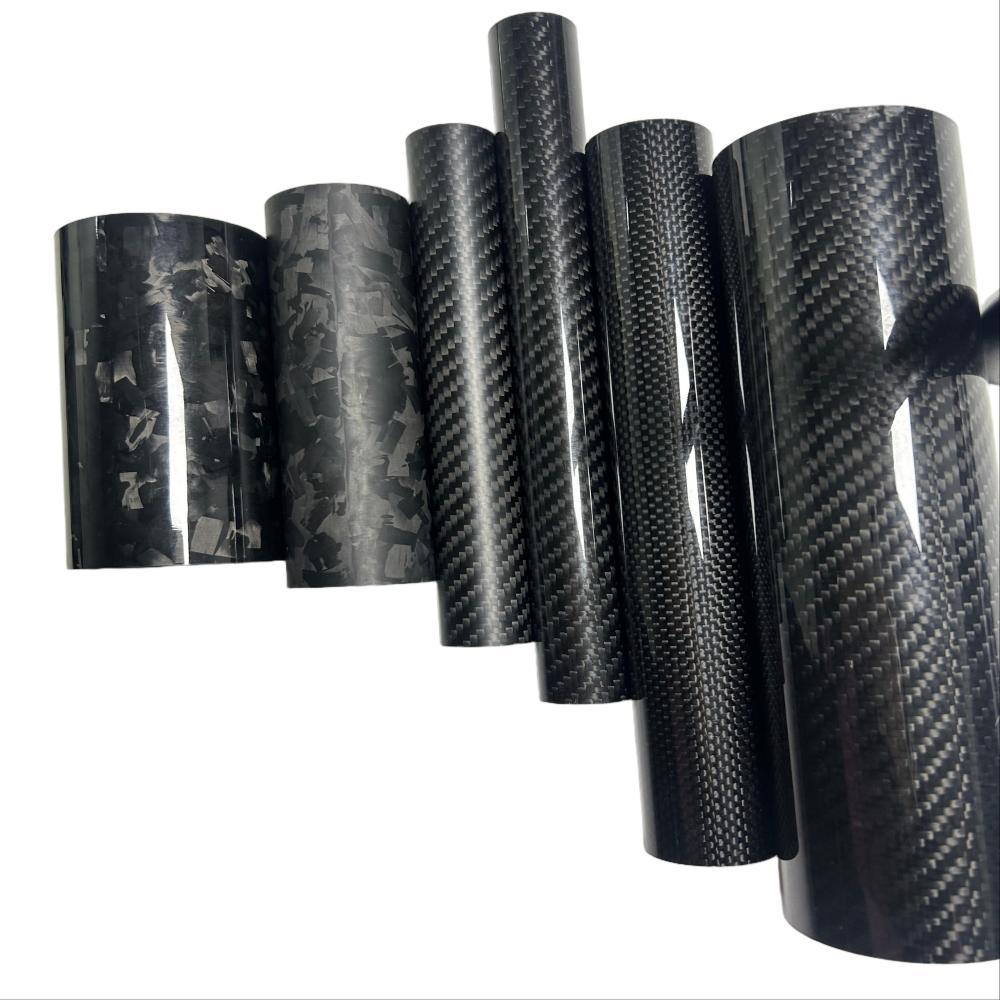
Carbon fiber tubing, also known as carbon tube or carbon fiber tube, is composed of carbon fiber material and specific resin materials. It is widely used in various supporting equipment such as drones, rotating shafts, rollers, medical devices, sports equipment, and high-end camera slide rails, and is one of the lightweight materials used in high-end industrial fields to replace metal tubing.
What are the key factors affecting the quality of carbon fiber tubing?