From "high-end equipment" to "mass consumption", what changes has carbon fiber brought to our lives?
There is a material that is lighter than feathers but harder than steel. It has many advantages such as low density, high strength, corrosion resistance, and high temperature resistance. It is known as "black gold". This material is carbon fiber. At present, it is not only used to make rockets, airplanes, trains, and bridges, but also in the bicycles we ride, the running shoes we wear, the rackets we use, the glasses we wear, and more and more daily necessities. From "high-end equipment" to "mass consumption", what changes has carbon fiber brought to our lives?
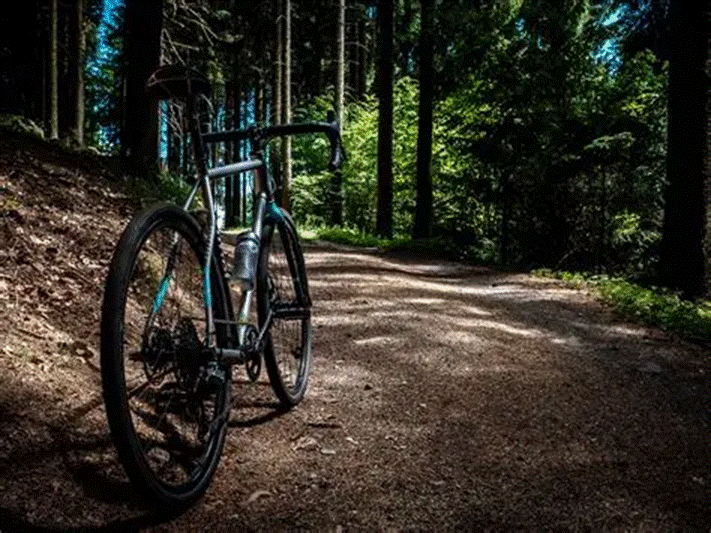
CCTV reporter Li Dong: These two bicycles have basically the same shape, but because of the difference in materials, their weights are very different. The frame of this domestically produced carbon fiber bicycle weighs only less than 700 grams, which is very light. The frame of the other bicycle is made of aluminum alloy, which is nearly three times heavier than 700 grams. The lighter carbon fiber bicycle also brings a better riding experience.
In the past, a carbon fiber bicycle started at tens of thousands of yuan, and some even cost more than 100,000 yuan, which made many people "daunted". Now, the reporter noticed that more and more thousand-yuan models have been launched on the market, attracting many consumers to buy them.
Carbon fiber materials help upgrade sports equipment
Carbon fiber bicycles can not only meet the requirements of professional events such as the Olympics, but also allow more and more ordinary consumers to enjoy the improved riding performance as the price continues to drop. How does it achieve good quality and low price? What other sports equipment can it be used for?
When the reporter came to the production workshop of smart carbon fiber bicycles, the workers were stepping up the assembly line and coating line to rush orders. The staff told reporters that through independent innovation and technical research, the company not only mastered advanced carbon fiber processes from raw fiber carbonization to prepreg production, but also increased the impact strength of carbon fiber composite materials by 30%. With the improvement of technology, production capacity is also continuously expanding, forming the cost advantage of domestic brands.
Not only bicycles, carbon fiber materials can also be used to build smart fitness stations, integrating physical fitness testing, strength training and other functions to guide citizens to exercise scientifically. With the blessing of carbon fiber materials, the equipment is not afraid of "wind and sun", and the weather resistance is increased to more than 10 years.
Technological breakthrough: Carbon fiber materials are now available to ordinary people
Although carbon fiber has excellent performance, its high cost once made it out of reach for ordinary people. But now, carbon fiber has changed from "selling by kilogram" to "selling by ton". How is this done?
In Sinopec Shanghai Petrochemical Plant, the carbon fiber production line is operating efficiently. This is not only one of the few companies in China with complete carbon fiber production capabilities, but also the first production base to realize the localization of the entire process from raw yarn to carbon fiber.
The production of carbon fiber starts with raw yarn, and the cost of raw yarn accounts for 40% to 50% of the total cost. As the "starting point" of carbon fiber, the quality of raw yarn directly affects the performance of the final product. However, for a long time, the core technology of high-end raw yarn has been monopolized by foreign countries, resulting in the domestic carbon fiber industry being controlled by others.
The raw yarn needs to go through complex processes such as pre-oxidation and carbonization to become carbon fiber, and this process consumes extremely high energy. In order to save energy and reduce costs, the team independently developed the first large-tow oxidation and carbonization equipment in China, innovatively realizing energy recycling.
Through large-scale production, intelligent operation and heat recovery and utilization, the power consumption in the carbonization process has been successfully reduced by about 25%, promoting the transformation of carbon fiber from "selling by kilogram" to "selling by ton".
Carbon fiber products completed on the production line must also undergo rigorous performance testing. In the laboratory, the reporter saw the carbon fiber that had just been produced and was undergoing strength testing.
Technological breakthroughs have made the price of T300-grade carbon fiber, which used to be about 200,000 yuan per ton, only about 60,000 yuan now, a drop of 70%. The release of production capacity and the scale effect have allowed carbon fiber to "fly" from high-end fields such as aerospace materials to the civilian field. More and more industries can afford and use carbon fiber. Data show that in 2024, the scale of my country's carbon fiber market will be about 17.14 billion yuan, with a year-on-year increase of 8.16% in output and a year-on-year increase of 119.9% in exports, significantly improving its competitiveness in the global market.

Applications continue to expand, carbon fiber materials bring more new opportunities
Once "exclusive to aerospace", it has now become a "civilian artifact". The application scenarios of carbon fiber materials are constantly expanding, and it has also brought new opportunities to more industries. Today, carbon fiber materials have been used in more than 20 industries and fields. In the field of construction, old houses can be reinforced by applying a layer of carbon fiber cloth, and even the earthquake resistance of the building can be improved. A carbon fiber fishing rod can pull a small car weighing nearly 3 tons. Its strength is twice that of an ordinary fishing rod, and its weight is reduced by half. For an electric vertical take-off and landing aircraft, more than 70% of the fuselage material is made of carbon fiber composite materials, and the range can be increased by 15% to 20%. It is estimated that by 2030, the demand for carbon fiber in the field of electric vertical take-off and landing aircraft will increase to 11,700 tons, forming an emerging market of more than 10 billion yuan. New materials bring great opportunities. Ten years ago, 90% of high-end carbon fiber was imported, and now the localization rate has exceeded 76%. The increasingly complete industrial chain and technical support continue to broaden the imagination of "carbon fiber".
Filament Winding Technology of Carbon Fiber-Polyurethane Composites: Revolutionizing Lightweight Design of Building Structures
From the shell to the rotor: How do carbon fiber composites "penetrate" the entire drone?
Related Article