The entire process of carbon fiber SMC compression molding
author: lily
2025-12-04
The entire process of carbon fiber SMC compression molding
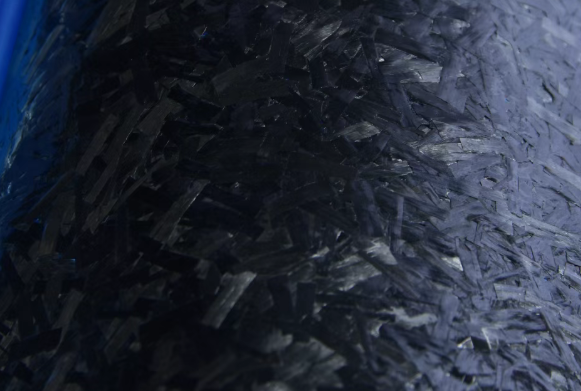
1. Carbon fiber SMC (abbreviation for Sheet Molding Compound) is a sheet molding compound formed by impregnating short-cut carbon fibers, matrix resin, additives and other materials in
a certain proportion using professional molding equipment and a certain process.
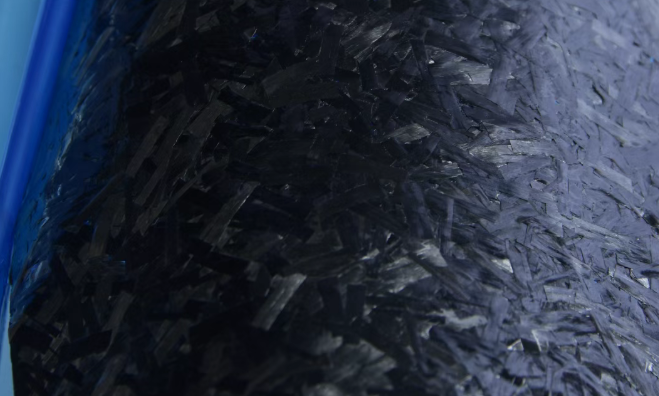
02. Carbon fiber SMC molding refers to the process of cutting carbon fiber SMC sheets according to the requirements of product size, shape, thickness, weight, etc., and then stacking the cut materials
into a heated metal mold cavity and curing them according to the pre-set process molding conditions.

Unroll, cut Layer Mold closing Pressure curing Demoulding
Carbon fiber SMC molding process
Step 1 Material Inspection
The quality of carbon fiber SMC sheets has a significant impact on the molding process and the quality of the finished product. Therefore, it is essential to understand the quality of the material before pressing,
such as resin type, fiber content, areal density and unit weight, film peelability, whether the material is expired, whether the fiber impregnation is good and free of impurities, whether the film coating is damaged,
and the material hardness and uniformity of quality.
Step 2 Material Cutting
The material is thawed until there is no water vapor on the surface of the PE bag before cutting. The shape and size of the sheet are determined by the structure and shape of the product, the feeding position, and the process.
The material is thawed until there is no water vapor on the surface of the PE bag before cutting. The shape and size of the sheet are determined by the structure and shape of the product, the feeding position, and the process.
The size is usually 70%-100% of the projected area of the product surface. To prevent contamination from external impurities, the upper and lower films are removed only before loading. At the same time, the work area is kept
clean to avoid introducing foreign objects.
Step 3 Adjusting Press Parameters
① Mainly includes "pressure", "temperature" and "molding time", which are determined based on product thickness, material requirements, mold conditions, etc.
① Mainly includes "pressure", "temperature" and "molding time", which are determined based on product thickness, material requirements, mold conditions, etc.
② The mold must be installed horizontally and ensured that the installation position is centered on the press table;
Step 4 Cleaning the Mold
① Thoroughly clean the mold and apply a release agent. Before adding material, wipe the release agent evenly with a clean cloth to avoid affecting the appearance quality of the product. For new molds, degreasing is necessary before use.
① Thoroughly clean the mold and apply a release agent. Before adding material, wipe the release agent evenly with a clean cloth to avoid affecting the appearance quality of the product. For new molds, degreasing is necessary before use.
② Close the mold and heat it.
Step 5 . Confirm Mold Temperature
① Open the mold and use a contact thermometer to measure the temperature of the upper and lower mold cavities (Note: Measure at multiple points including front, back, left, center, and right to ensure the mold surface temperature reaches
① Open the mold and use a contact thermometer to measure the temperature of the upper and lower mold cavities (Note: Measure at multiple points including front, back, left, center, and right to ensure the mold surface temperature reaches
above the material's required pressing temperature, and the mold core temperature is approximately 5 degrees Celsius lower than the cavity temperature);
② If the temperature is not reached, close the mold and wait for continued heating;
③ If the temperature is reached, spray release agent onto the upper and lower molds again.
② If the temperature is not reached, close the mold and wait for continued heating;
③ If the temperature is reached, spray release agent onto the upper and lower molds again.
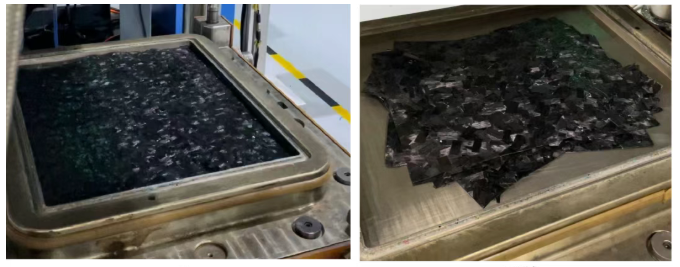
Step 6. Confirm Feeding Amount and Area
① Feeding Amount: The feeding amount for each product during the initial pressing can be calculated using the following formula: Feeding Amount = Product Volume * Density 1.5g/cm²;
② Feeding Area: The size of the feeding area directly affects the density, flow distance, and surface quality of the product. It is related to the flow and curing characteristics of SMC, product performance requirements, mold structure, etc.
Generally, the feeding area is 70%-100%. Too small an area will result in excessively long flow paths, leading to fiber orientation, reduced strength, increased waviness, and even failure to fill the mold cavity.
③ Material feeding position: The feeding position and method directly affect the appearance, strength, and directionality of the product. Generally, the material should be fed into the center of the mold cavity. For asymmetrical and complex products,
the feeding position must ensure that the material flow simultaneously reaches all ends of the mold cavity during molding.
Step 7 High Temperature and High Pressure Molding
After the material block enters the mold cavity, the machine is started, and the press descends rapidly. When the upper and lower molds are aligned, the required molding pressure is slowly applied. After a period of heat and pressure holding,
After the material block enters the mold cavity, the machine is started, and the press descends rapidly. When the upper and lower molds are aligned, the required molding pressure is slowly applied. After a period of heat and pressure holding,
the product molding is complete. During the molding process, molding process parameters should be set reasonably according to the material characteristics and press conditions.
① Molding Temperature: The molding temperature depends on the curing system of the resin paste, the thickness of the product, production efficiency, and the complexity of the product structure. The molding temperature must ensure
the smooth initiation and cross-linking reaction of the curing system and achieve complete curing. The molding temperature of carbon fiber SMC is generally between 130-140℃.
Generally, the molding temperature for thicker products should be lower than that for thinner products to prevent excessive heat buildup inside the thicker product. Increasing the molding temperature can shorten the curing time; conversely, decreasing the molding temperature requires extending the curing time. The molding temperature should be selected by balancing the maximum curing speed and the optimal molding conditions.
② Molding Pressure: The molding pressure of SMC varies depending on the product's structure, shape, size, and the degree of SMC thickening. Products with simple shapes require lower pressure, while those with complex shapes require higher pressure.
The higher the degree of SMC thickening, the greater the required molding pressure. Products with high requirements for appearance and smoothness require higher molding pressure during molding. In short, determining the molding pressure should consider multiple factors. Generally, the molding pressure for carbon fiber SMC is between 10-25 MPa.
③ Molding Time: The curing time (also called holding time) of carbon fiber SMC at the molding temperature is related to its properties and curing system, molding temperature, product thickness, and color. The molding time of carbon fiber SMC is usually between 10 and 15 minutes.
Since SMC is a fast-curing system, rapid press closure is crucial. If the press closes too slowly after feeding, pre-cured spots may appear on the product surface, or there may be material shortages or excessively large dimensions. While achieving rapid closure, the mold closing speed should be carefully adjusted at the end of the press stroke. When the mold is a certain distance from closing, the mold closing speed should be slowed down to facilitate venting.
Step 8 Demolding and Appearance Inspection
① Slowly open the upper mold. After it rises to 10mm, check if the product is stuck. Once the product is confirmed to remain in the lower mold, move the upper mold to the upper limit. Open the top mold mechanism and slowly lift the product out.
② Inspect the product's appearance for missing materials, dirt, air holes, dry yarn, etc. For products that do not require painting, trim off any excess burrs to complete the production process.
Carbon fiber tubes vs. fiberglass tubes: Which is better?
The Difference Between Wet and Dry Carbon Fiber
Related Article

Carbon fiber composites, with their lightweight, high strength, and excellent electromagnetic properties, are becoming the preferred choice for drone manufacturing. From the shell to the rotor, they not only reduce weight but also improve flight efficiency and durability. Advanced processes such as compression molding and autoclave technology are further driving breakthroughs in drone performance, contributing to the future modular and intelligent development.
Why are more and more drones using carbon fiber casings?
Carbon fiber composites have wide applications in aerospace, industrial manufacturing etc. Their advantages, such as lightweight, high strength, corrosion resistance, good electrical conductivity, and excellent electromagnetic shielding, are increasingly recognized. Shenzhen Ant Carbon Fiber Co., Ltd., drawing on years of production experience, will answer some common questions today for your reference.
Basic knowledge about carbon fiber composite products
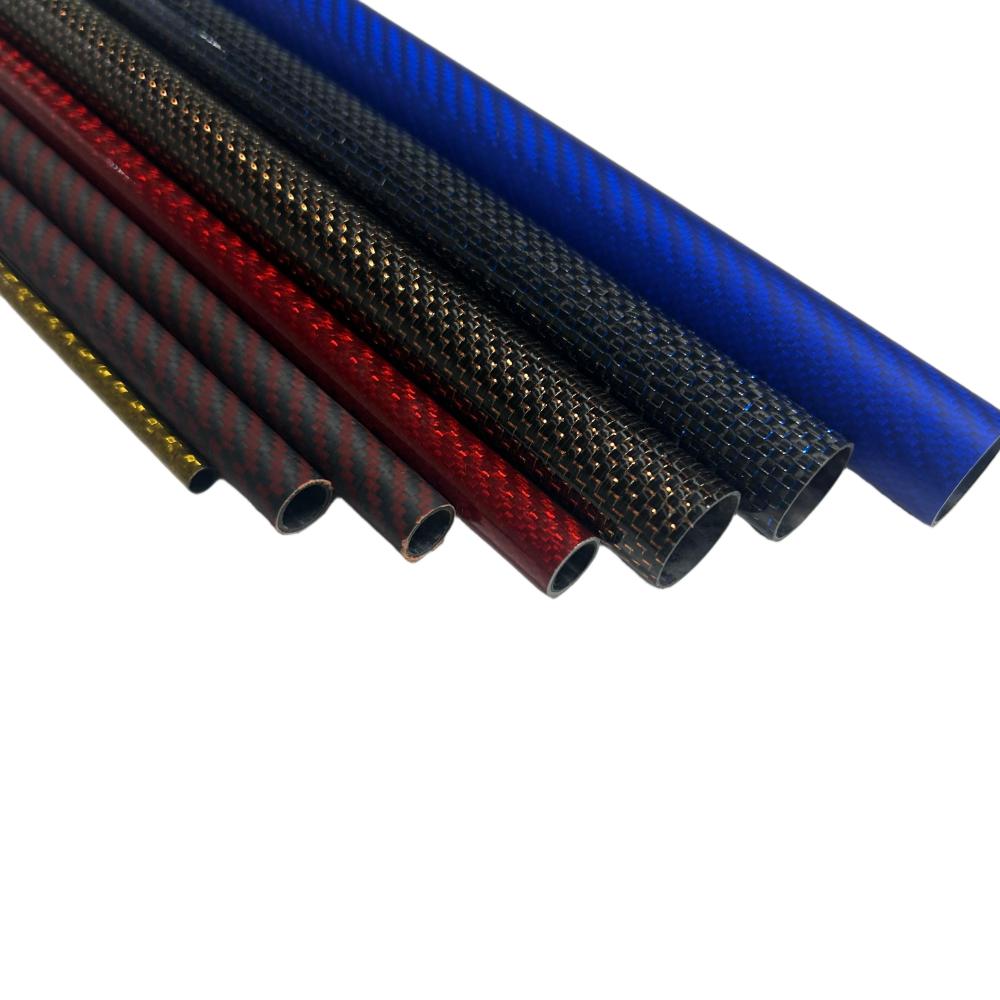
The processing of carbon fiber tubes requires different processing techniques for different applications, but the most common process is to process holes in carbon fiber tubes. In order to meet the processing requirements, we must pay more attention to the hole processing. In this process, some defects are prone to occur, with delamination being the most common. What are these details?
The formation of delamination phenomenon in carbon fiber tube hole processing
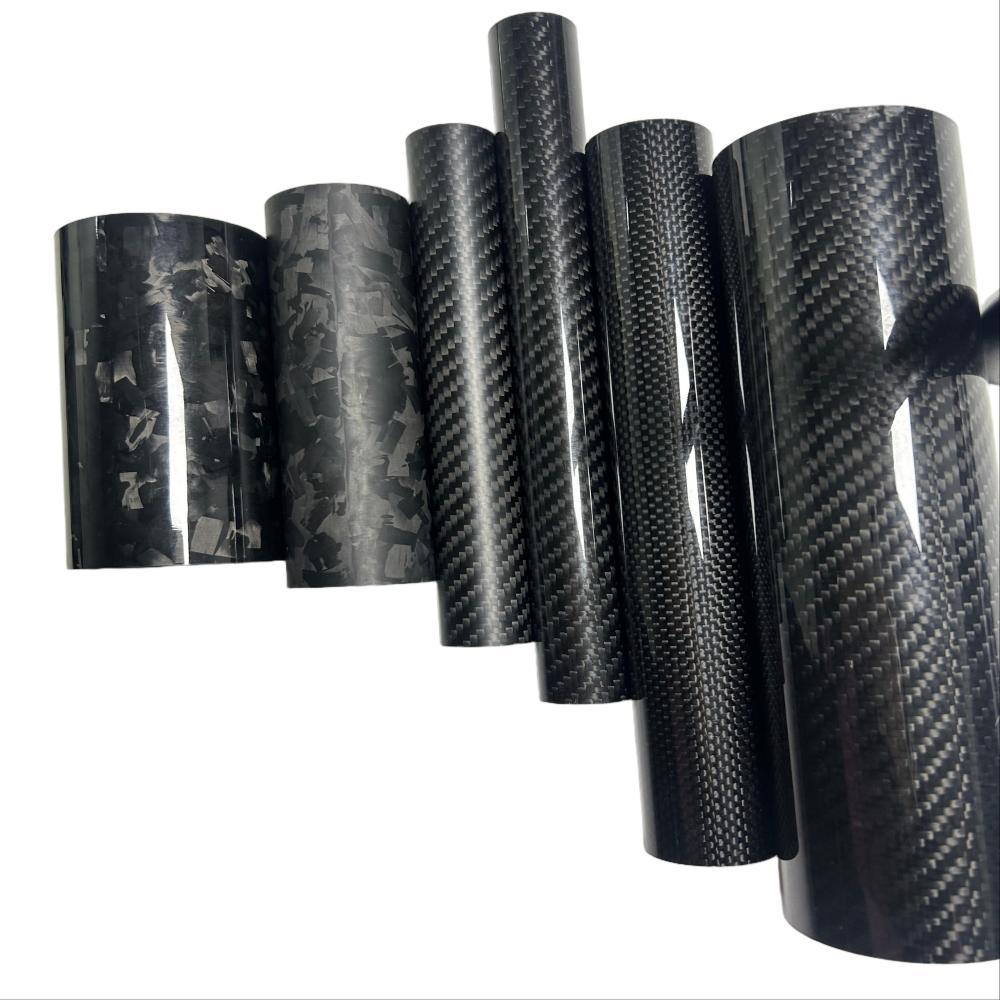
Carbon fiber tubing, also known as carbon tube or carbon fiber tube, is composed of carbon fiber material and specific resin materials. It is widely used in various supporting equipment such as drones, rotating shafts, rollers, medical devices, sports equipment, and high-end camera slide rails, and is one of the lightweight materials used in high-end industrial fields to replace metal tubing.
What are the key factors affecting the quality of carbon fiber tubing?